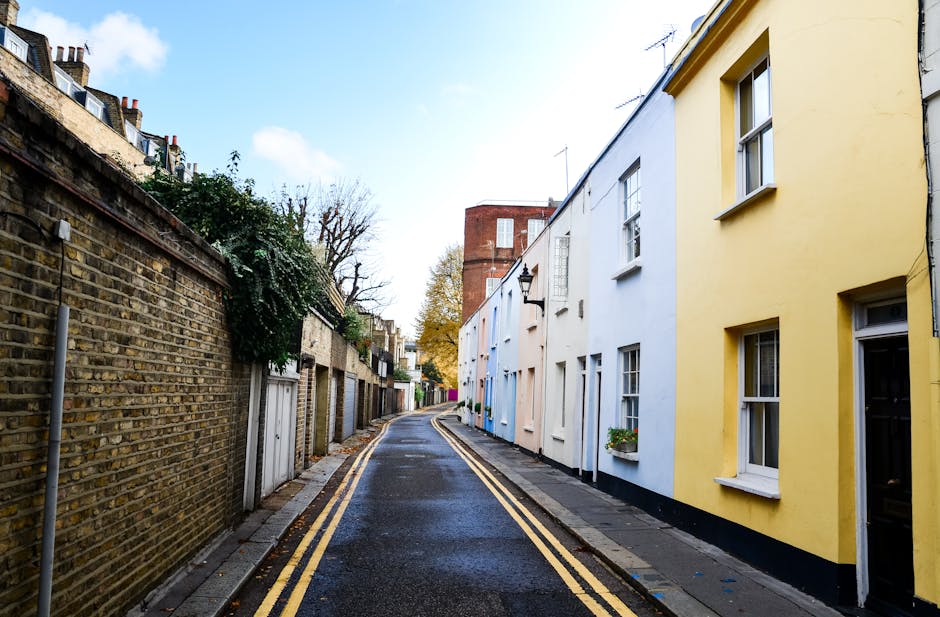
Hackney removal service access advice for narrow streets
Moving house or business in Hackney can feel straightforward right up until the van turns into a street that barely leaves room for a car, let alone a furniture lorry. That is where Hackney removal service access advice for narrow streets becomes genuinely useful. It is not just about getting a vehicle close to the door; it is about planning loading, timing, parking, turning space, neighbour access, and the practical realities of London streets that can be tight, busy, and a bit unforgiving on the day. If you get the access side right, the rest of the move tends to calm down as well. Simple as that.
In this guide, you will find clear advice on how narrow-street removals work in Hackney, what problems to expect, how to prepare, what good removal teams do differently, and which mistakes cause delays. There is also a checklist, a comparison table, and a realistic example so you can judge what level of planning your move needs.
Table of Contents
- Why access advice matters in Hackney
- How narrow-street removals work
- Key benefits and practical advantages
- Who this is for and when it makes sense
- Step-by-step guidance
- Expert tips for better results
- Common mistakes to avoid
- Tools, resources and recommendations
- Law, compliance, standards and best practice
- Options, methods and comparison table
- Case study or real-world example
- Practical checklist
- Conclusion
- Frequently asked questions
Why Hackney removal service access advice for narrow streets Matters
Hackney has plenty of streets where access is the real challenge, not the packing. Terraced roads, parked cars, junction pinch points, low tree branches, bin days, school runs, delivery vans, and the usual London stop-start traffic can all make a seemingly simple removal more complicated than expected. If a removal vehicle cannot stop safely or cannot get close enough, the job takes longer. And once the clock starts moving, so do the stress levels.
Access advice matters because removals are a chain of small decisions. Where will the van wait? Can it reverse in safely? Will the crew need to shuttle items by hand? Is there enough room for a larger vehicle, or would a smaller van plus multiple runs be safer? These questions sound basic, but in narrow streets they shape the whole day.
Good access planning is not about being overcautious. It is about reducing avoidable friction. A five-minute chat before the move can save an hour of awkward manoeuvring later. That is especially true in areas where residents are already competing for curb space and where one parked hatchback can block the whole plan. To be fair, Hackney is not unusual in that sense; it is just very good at reminding people that space is a luxury.
It also matters for safety. A truck squeezed into a narrow street can create blind spots, limit escape routes, and increase the chance of minor knocks to walls, mirrors, railings, or kerbs. The better you understand the access situation, the better you can choose the right vehicle size, loading method, and timing window.
If you are comparing a move with storage or extra packing support, it can help to review the practical side of your provider first, including the information on the team's background and approach and the useful details in their insurance and safety guidance. Those pages help set expectations before moving day arrives.
How Hackney removal service access advice for narrow streets Works
At a practical level, narrow-street removal advice works by turning an uncertain access problem into a plan. The process usually starts with basic questions: what street is involved, how wide is the access, where can a vehicle stop, and how far will items need to be carried? Then you work through the moving method that best fits the street, the property, and the volume of belongings.
In many cases, the first decision is vehicle type. A large lorry might make sense for a straightforward suburban move, but in Hackney it can be the wrong tool if the road is tight or heavily parked. A smaller van, a timed arrival, or a shuttle system may be more suitable. Sometimes the removal team may ask for photos, measurements, or a quick video call so they can judge the approach properly. That is not fussiness. It is practical.
The second part is route planning. A street may look accessible on paper but turn out to have a sharp bend, resident permit pressure, or a loading gap that disappears at the wrong time of day. Removal teams often need to consider the approach road as much as the property itself. Can the driver turn around nearby? Is there a one-way system? Is there a sensible place to pause without blocking traffic?
The third part is the carry distance. If the van cannot get right outside the door, items may need to be moved by hand from a temporary stopping point. That is manageable, but it changes the time, the labour, and the risk profile. A long carry with heavy furniture is one thing on a quiet street; it is another on a wet morning with passing cyclists and a neighbour trying to squeeze past with a buggy. Real life, basically.
Finally, there is communication. Good access advice is not just instructions sent once and forgotten. It should create a shared understanding between you and the removal team. If anything changes the day before, or even on the morning, the plan should be flexible enough to adapt without panic.
Key Benefits and Practical Advantages
The biggest benefit is obvious: less disruption. But there are several smaller gains that are easy to miss if you only think about the move as a one-off task.
- Shorter loading time: the closer the vehicle can get, the faster the move usually runs.
- Reduced risk of damage: fewer awkward turns, fewer dropped lifts, fewer chances of scraping property or furniture.
- Better crew efficiency: movers spend more time carrying items and less time problem-solving in the street.
- Lower pressure on neighbours: thoughtful access planning helps avoid blocking entrances, bins, or shared driveways.
- More accurate quotes: once access is understood, estimates tend to be more realistic.
- Less last-minute improvisation: which is where a lot of removals go sideways, honestly.
There is also a quieter benefit: confidence. When you know the van can fit, or at least know the fallback plan, you are less likely to spend the night before moving day imagining every possible disaster. And yes, people do that. Everyone does it a bit.
Another practical advantage is better packing strategy. If you know the move-in or move-out access is tight, you may decide to label boxes more clearly, dismantle bulky items earlier, or stage things closer to the exit. That helps on the day and makes the crew's job more efficient.
If you want to see how access planning fits into pricing, the page on pricing and quotes is a useful starting point. It is often easier to budget properly once access is assessed properly. That sounds obvious, but it is where a lot of people get caught out.
Who This Is For and When It Makes Sense
This advice is useful for more people than you might think. If your move involves a narrow terrace street, a cul-de-sac with parked cars, an upstairs flat with limited front access, or a property near a busy road where stopping briefly is hard, you will benefit from planning access early.
It is especially relevant if you are:
- moving from a Hackney flat with no driveway or forecourt;
- relocating furniture through a shared hallway or side passage;
- using a larger volume of items than a standard car can manage;
- moving on a day with predictable traffic pressure, such as a Friday afternoon or school-run time;
- combining removals with temporary storage;
- handling fragile, heavy, or awkward items like wardrobes, beds, mirrors, or office equipment.
It also makes sense if you have limited flexibility on timing. Some moves can wait for a quieter window; others cannot. If you only have a narrow slot for handover, then every access detail matters even more. A tenant leaving a flat by noon, a cleaner arriving after that, and a van trying to park in a street full of double-parked vehicles is a familiar sort of headache in London. Not ideal, but manageable with planning.
For people who are moving and storing items temporarily, it can be useful to check practical support pages such as health and safety guidance and recycling and sustainability information. They are not just policy pages; they help you think about how the move should be handled responsibly.
Step-by-Step Guidance
If you are planning a removal in a narrow Hackney street, here is a practical sequence that tends to work well.
1. Assess the street honestly
Start with the route outside your property. Look at the width, parking pressure, turning room, and any obvious obstacles such as roadworks, bins, speed cushions, low branches, or tight corners. If you can, take photos from both directions. A short walk at the time of day you plan to move is even better, because streets can feel very different at 8 a.m. compared with lunchtime.
2. Measure the access points
Measure the front door, hallway bends, stairwell width, and any gate or passage that bulky items must pass through. This is where sofas and wardrobes tend to become suddenly opinionated. If something needed a two-person carry to get into the property, it will probably need the same level of care getting out.
3. Decide on the vehicle size
Choose the vehicle that suits the street, not the one that looks most efficient on a spreadsheet. A smaller van with fewer manoeuvring issues may be faster overall than a large vehicle that forces a complicated loading position. In some cases, two smaller runs can be cleaner than one stressful big one.
4. Plan the loading point
Agree where the van can stop without causing an argument with the entire road. If there is a permit bay, a loading area, or a space near the property, identify it early. If not, decide on a safe fallback point and the carry route from there. Clear stopping instructions are often worth their weight in cardboard tape.
5. Build in timing slack
Do not schedule the move to the minute if access is tight. Give yourself breathing space for parking, crew briefing, and any delays caused by traffic or neighbours moving cars. A bit of slack sounds boring. It is actually the thing that makes the day bearable.
6. Protect the property and the street
Use floor protection, corner guards, blankets, and sensible lifting technique. Tight streets mean tighter margins. The team should be careful with door frames, railings, kerbs, and shared hallways. If you live in a managed block, make sure any building rules around lifts, lobbies, or booking windows are understood in advance.
7. Confirm the final plan the day before
A quick confirmation call or message can catch issues early. Parking suspensions, weather, roadworks, or a neighbour's van can change the situation overnight. One careful check can save a lot of improvisation.
Expert Tips for Better Results
In our experience, the best moves in narrow Hackney streets are not the ones with the fanciest kit. They are the ones with the clearest preparation. Here are the practical habits that make the biggest difference.
- Send photos, not just descriptions. "It is a bit tight" means very different things to different people.
- Be honest about awkward items. If the sofa barely made it in, say so. No shame in it.
- Move cars early. If you or a neighbour can free up a space, do it well before the crew arrives.
- Label fragile or high-priority boxes clearly. When access is tight, the crew needs to know what should be loaded first and what should stay accessible.
- Keep hallways clear. Shoes, plant pots, bikes, and random storage boxes slow everyone down.
- Think about the weather. Rain makes hand-carry distances more tiring and more slippery. A wet pavement at 7 a.m. is nobody's favourite bit of moving day.
- Arrange keys and access codes in advance. Nothing kills momentum faster than waiting at the pavement for someone to unlock the front door.
Here is a small but useful tip: if you are worried about whether the van can reach your street, stand at the end of the road and imagine the turn from a driver's eye level. It is a very different picture from looking at a street map on your phone. Street maps are helpful, sure. They are not magic.
It can also help to separate "access" into two questions: can the van reach the property, and can the items reach the van safely? They are related, but not identical. That distinction saves a lot of confusion.
Common Mistakes to Avoid
Most access problems are predictable. That is the slightly annoying part. The good news is that they are also avoidable if you know what to watch for.
- Assuming the street will be clear. In Hackney, parked vehicles often turn a fine plan into a tight squeeze.
- Choosing vehicle size too early. The biggest van is not always the best van.
- Ignoring carry distance. Even a short walk from van to door matters when there are multiple heavy items.
- Not checking restrictions. Some streets are easier at certain times than others. Timing matters more than people expect.
- Leaving packing until the last minute. If boxes are still half-sealed when the crew arrives, access issues become much harder to manage.
- Forgetting neighbour impact. Blocking entrances or driveways creates avoidable tension. And nobody needs that on moving day.
- Not telling the removal team about stairs, turns, or split-level layouts. Those hidden details can make a simple carry much harder.
Another common mistake is treating access advice as optional. It is not. Even a short move can unravel if the final 30 metres are not planned. That is the bit people remember later, usually with a sigh.
Tools, Resources and Recommendations
You do not need specialist equipment to plan access well, but a few simple tools help a lot.
- Phone camera: useful for street photos, stair angles, and tight entryways.
- Measuring tape: ideal for doors, hallways, furniture widths, and turnaround space.
- Clipboard or notes app: keeps instructions together so nothing gets lost under stress.
- Box labels and coloured tape: helps prioritise loading in a narrow window.
- Protective coverings: blankets, floor runners, and corner protection help preserve both property and furniture.
For administrative details, a few pages on the site are worth checking before the move begins. The terms and conditions page is useful for understanding the practical framework of the service, while the payment and security information can help you sort out the money side without last-minute surprises. If you have questions about how information is handled, the privacy policy gives clear reassurance.
If your move is linked to storage, one of the best questions to ask is whether your access issues can be partly offset by careful staging. For example, moving non-urgent items into storage first can reduce the pressure on the final removal day. Not always possible, but often helpful.
Law, Compliance, Standards and Best Practice
This is not the kind of topic where you need to memorise legislation, but it does sit within a broader framework of safety, responsible transport, and sensible street use. In practice, the main expectations are straightforward: avoid unsafe parking, do not create unnecessary obstruction, protect people and property, and follow any local parking or loading rules that apply to the street or building.
Removal teams operating in London normally need to work carefully around traffic, loading access, and pedestrian safety. If a street is narrow, the emphasis should be on control and communication rather than speed. That is standard good practice, not an optional extra. Crew members should lift safely, use suitable equipment, and avoid forcing items through spaces that are clearly too tight. A quick delay is much better than a damaged wall or an injured back.
It is also sensible to respect building management rules where relevant. Some blocks require lift booking, protective padding, advance notice, or restricted moving hours. If you are moving from a flat, check those rules early. You may feel you have plenty of time, and then suddenly you do not. Funny how that happens.
From a customer perspective, asking about insurance, safety handling, and complaint routes is good practice too. A reputable provider should be open about those points. If you need a clear place to start, the pages on insurance and safety and the complaints procedure are the sort of pages that show how the business handles responsibility and customer concerns.
Options, Methods, and Comparison Table
There is no single right method for every narrow street move. The best choice depends on the road, the load, and the timing. Here is a simple comparison to help you think it through.
| Method | Best for | Pros | Watch-outs |
|---|---|---|---|
| Large removal vehicle | Broad access and larger loads | Fewer trips, efficient on open streets | May struggle to park or turn in narrow Hackney roads |
| Small van with direct loading | Short, tight streets with limited space | Easier manoeuvring, often less stressful | May need more careful load planning |
| Shuttle system | Very tight access or restricted stopping | Flexible, reduces pressure at the door | Can take longer and needs more coordination |
| Split move with storage | Complex schedules or staged moves | Lowers pressure on the main move day | Requires extra planning and organisation |
The table is simple on purpose. In real life, the choice often comes down to one thing: how much certainty do you have about the street? If certainty is low, flexibility usually wins. If certainty is high, efficiency becomes more realistic. That is the balance.
Case Study or Real-World Example
Here is a realistic example based on the sort of move people often face in Hackney. A family is leaving a first-floor flat on a narrow residential street with parking on both sides. Their dining table is awkward, the sofa is long, and the building has a shared front entrance that opens directly onto the pavement. On paper, it sounds manageable. In practice, the street is busier than expected by mid-morning, and a van parked opposite leaves almost no room to reverse.
Instead of forcing the larger vehicle into the street, the team chooses a smaller van and agrees a loading point half a minute further down the road where there is a safer gap. The family has already moved small boxes into one room near the front. A neighbour helps move one car. The movers protect the hallway, load the fragile items first, and keep a clear path through the front door. The job takes a bit longer than the family hoped, but it stays calm. No drama, no scraped brickwork, no one getting grumpy at the kerb.
The useful lesson? The move was not "easy". It was planned. That difference matters more than most people realise. When access is tight, a small adjustment in vehicle choice or loading point can turn a difficult move into a smooth one.
Practical Checklist
Use this checklist a day or two before the move, then again on the morning itself.
- Confirm the exact address and any flat number, building entrance, or rear access detail.
- Take photos of the street from both ends if the route is tight.
- Measure wide furniture and doorways, not just the rooms.
- Check for parking pressure, delivery bays, and likely congestion times.
- Move vehicles or ask neighbours to help free space where appropriate.
- Tell the removal team about stairs, sharp turns, or low ceilings.
- Pack and label boxes before the crew arrives.
- Keep hallways, landings, and front steps clear.
- Protect floors, doors, and corners where items will pass through.
- Have keys, building codes, and contact details ready.
- Agree the fallback plan if the van cannot stop directly outside.
- Keep an eye on weather, roadworks, and last-minute street changes.
Expert summary: narrow-street removals in Hackney go best when access is treated as a planning issue, not a last-minute driving problem. Get the street details, choose the right vehicle, protect the route, and build in a little slack. That is usually the difference between a move that feels chaotic and one that feels under control.
If you are still comparing providers or preparing your own move, it may also help to review the company's accessibility statement so you know how support and access considerations are handled more broadly. Small detail, big reassurance.
Conclusion
Hackney removal service access advice for narrow streets is really about reducing uncertainty in a place where space is limited and timing matters. When you plan the street access properly, the whole move gets easier: the crew works more efficiently, your belongings are safer, and you are less likely to spend the day firefighting small problems that should never have become big ones.
The best approach is usually simple. Check the route, measure the awkward bits, choose the right vehicle, and give everyone involved a clear plan. If that sounds like common sense, it is. But common sense is exactly what saves the day when a narrow Hackney street meets a full van and a tight schedule.
Get a free quote today and see how much you can save.
And if you are preparing for a move right now, take a breath. A careful plan usually goes a long way, and a calm move is still possible even on the tightest street.
Frequently Asked Questions
How do I know if my Hackney street is too narrow for a removal van?
If parked cars already make passing difficult, or if a van would need to reverse a long way or block traffic, the street is probably challenging enough to need extra planning. Photos and a quick street walk are the best way to judge it honestly.
Should I choose a smaller van for a narrow street move?
Often, yes. A smaller van can be easier to park, turn, and position safely. In some cases it is faster overall than forcing a larger vehicle into a tight road.
What should I tell the removal team before moving day?
Share the exact access conditions: narrow turns, parking pressure, stairs, shared entrances, carry distances, building rules, and anything that could slow loading or unloading. The more specific you are, the better.
Can removal crews work if the van cannot park right outside the property?
Yes, usually. The team may use a shuttle approach or carry items from a safe nearby stopping point. It just needs to be planned so it does not become chaotic.
How far in advance should I check access?
As early as possible, ideally when you start booking the move. A final check the day before is also sensible because street conditions can change.
Do narrow streets make removals more expensive?
They can, because tight access often means more labour, more time, or a different vehicle setup. The exact cost depends on the route, the load, and how much extra handling is needed.
What are the biggest mistakes people make on narrow-street moves?
The most common ones are underestimating parking pressure, choosing the wrong vehicle, leaving packing too late, and not explaining hidden access issues like steep steps or tight hallways.
Is it worth taking photos of the street before the move?
Absolutely. Photos help the removal team judge the space more accurately than a written description ever can. One photo of a tight corner can save a lot of guesswork.
What if I live in a flat with shared access?
Then you should check building rules, lift bookings, and any restrictions on moving hours. Shared access often adds another layer of planning, especially when neighbours, hallways, or narrow staircases are involved.
How can I make loading quicker in a tight Hackney street?
Stage boxes near the exit, label them clearly, keep paths clear, and group fragile or priority items together. Quick loading is usually the result of preparation, not rushing on the day.
Do I need special equipment for a narrow-street move?
Not always, but protective covers, blankets, dollies, and good lifting straps can make a real difference. The right equipment depends on the type of furniture and the exact access conditions.
Where can I ask about pricing or get more help?
If you want to discuss the move in more detail, it is sensible to start with the contact page and ask for guidance based on your street, property type, and access concerns. A short conversation can clarify a lot.