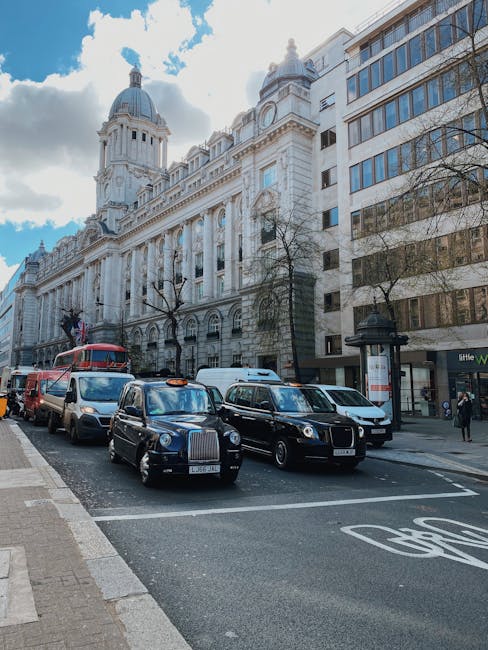
What to know about Hackney Council parking permits for removals

Moving house in Hackney is rarely just about boxes, tape, and a van. The parking side of the move can be the bit that catches people out, especially on streets where space is tight, bays are shared, and a van stop in the wrong place can quickly become a headache. If you are planning a move and want to understand What to know about Hackney Council parking permits for removals, this guide walks you through the practical side of it in plain English.
You will find what the permit is for, why it matters, how it usually fits into a removal day, and the mistakes that cost people time and money. We will also cover helpful planning tips, a realistic checklist, and a few common-sense decisions that make the whole thing smoother. Truth be told, a good moving day often comes down to the boring details. This is one of them.
Why Hackney Council parking permits for removals matter
In Hackney, parking is not just a convenience issue. It affects whether a removal van can stop close enough to the front door, how long loading takes, whether neighbours can still get past, and whether the move stays on schedule. On a busy London street, a few extra metres of carrying distance can turn into a very long morning. Anyone who has dragged a wardrobe along a narrow pavement in drizzle will know the feeling.
A removals parking permit, or a temporary parking arrangement connected to a move, helps reduce that friction. The basic purpose is simple: it gives your removal team a lawful, planned place to load or unload without relying on luck. That matters because moving day is usually full of moving parts already: keys running late, stairs tighter than expected, the sofa that never quite fits. Parking should not be one more surprise.
It also matters for compliance. Councils in London take parking controls seriously, and restrictions can vary by street, bay type, and time of day. If a van stops where it should not, the result may be a penalty, a delay, or a rushed loading process. None of those are ideal when your fridge is already half out the door.
Expert summary: If you are moving in Hackney, treat parking as part of the removals plan, not an afterthought. The earlier you handle it, the fewer last-minute problems you will have.
How Hackney Council parking permits for removals works
At a practical level, removals parking arrangements usually sit within the wider framework of local parking restrictions. That means you need to think about where the vehicle will stop, how long it will stay, and whether the location is controlled by resident bays, pay-and-display areas, suspended bays, yellow lines, or another restriction. The exact process depends on the street and the nature of the move.
For many people, the safest approach is to start by checking the move date, the property access, and the street layout. Then work out whether the removal vehicle needs a dedicated space close to the entrance. If it does, the next step is to organise the permit or parking arrangement early enough that you are not trying to sort it out while the boxes are already being carried downstairs.
Hackney streets can be busy at the best of times. Add school run traffic, delivery vans, recycling collection, and the normal London shuffle, and timing becomes a real factor. A permit does not magically create space where none exists, but it does make your plan much more reliable. That reliability is the point.
It is also worth remembering that removal companies sometimes have their own preferences for vehicle placement. A driver may want the van as close as possible to reduce lifting distance, protect heavy items, and keep the job moving. So the permit is not just paperwork; it directly affects how the move feels on the day.
What the permit is trying to solve
- Keeping the van near the property entrance
- Reducing loading and unloading time
- Lowering the risk of parking penalties
- Helping the team avoid awkward carrying routes
- Supporting a smoother timetable for the whole move
Key benefits and practical advantages
The biggest benefit is obvious: less stress. But there are several smaller advantages that people only notice once they have moved a few times. A permitted or properly arranged parking space can make the day quieter, cleaner, and quicker. It can also protect delicate items because there is less carrying distance and fewer turns through tight communal areas.
There is also a coordination benefit. If your removal crew knows in advance where the van will stand, they can plan the load sequence more effectively. Heavier items go first, fragile items can be staged more carefully, and the team wastes less time circling the block. You do not need to be a logistics expert to appreciate that.
Another practical advantage is neighbour relations. Nobody loves a van blocking a drive, a bin lorry route, or the last free patch of kerb space. A proper parking plan shows that you have thought ahead. That may sound small, but in a street full of people trying to get on with their day, it goes a long way.
| Benefit | Why it matters on moving day |
|---|---|
| Closer access | Reduces carrying distance and speed bumps in the process |
| Better timing | Helps your removals team work to a realistic schedule |
| Lower risk | Reduces the chance of parking issues or penalties |
| Less strain | Makes handling bulky items more manageable |
| Cleaner coordination | Improves the flow between key collection, van arrival, and loading |
If you are also organising storage during the move, this is where planning links up nicely with other parts of the job. For example, if you need interim storage, it can be useful to explore pricing and quotes early so the whole chain of events feels joined up rather than improvised.
Who this is for and when it makes sense
This topic is relevant to anyone moving in or out of Hackney where parking is not straightforward. That includes flat moves, house moves, short-notice removals, student relocations, and even partial moves where only a van load or two is involved. If the vehicle cannot simply pull onto private drive space, you should be thinking about a parking solution.
It is especially useful for:
- People living on narrow residential streets
- Residents in flats with no private parking
- Households with heavy furniture or large appliances
- Moves taking place during busy weekday hours
- Anyone using a removal company with a larger van or lorry
- Short moves where speed matters and the van needs to be close
It may also matter if you are moving from a property with awkward access, such as a top-floor flat, a mews-style street, or a building where the lift is out of action. In those cases, every extra metre matters. A lot. By the time you have carried three bookcases, you start to feel the difference in your shoulders and your patience.
If you are not sure whether you need a permit, ask yourself two questions: where will the van stand? and what happens if that spot is unavailable? If the answer to either question is "I'm not really sure", then it is probably time to plan more carefully.
Step-by-step guidance
The best way to approach removals parking in Hackney is to break the job into clear steps. That keeps the process practical and avoids the frantic phone calls that tend to happen when a van is already on the way.
1. Confirm your moving date and time window
Start with the actual moving window, not just the date. Morning and afternoon can feel very different on a London street. A slot that looks fine on paper can be a nightmare once traffic, school pickups, and delivery vans appear.
2. Check the property access
Look at the road, the nearest bay, any yellow lines, and whether the front entrance is easy to reach. Step outside if you can. Stand there for a minute. You will notice things that do not show up on a screenshot, like narrow kerbs, blind corners, or a line of bins where the van would have to stop.
3. Decide what type of parking arrangement you need
Some moves need a reserved bay or a temporary suspension of a space. Others only need enough lawful loading time in a nearby area. The right answer depends on the street and the size of the vehicle.
4. Liaise with your removal company
Tell your movers what the street is like, where the access point is, and whether there are likely to be parking limits. A good removal team will use that information to plan the vehicle size, crew numbers, and loading order. It sounds obvious, but you would be surprised how often this part is left until the last minute.
5. Build in a buffer
Give yourself some breathing room. If the parking plan fails by half an hour, can the move still go ahead? If not, the whole day becomes fragile. A little buffer makes the difference between "slightly annoying" and "complete chaos".
6. Keep records handy
Keep the relevant permit details, confirmation, and contact information together. If someone queries the arrangement, you do not want to be searching through screenshots, emails, and a half-charged phone while people wait in the rain.
7. Check the plan again the day before
Recheck timings, road restrictions, and any last-minute changes. A move day is not the time to assume everything is still exactly as it was last Tuesday.
If you are using storage during the move, it can help to review the terms and conditions before finalising your overall plan, especially if your schedule is likely to shift.
Expert tips for better results
Here is the bit people tend to appreciate most: the practical tips that are not flashy, just useful. In our experience, the smoother moves are usually the ones where someone has thought about the awkward bits in advance.
Choose timing with care
Mid-morning can sometimes be calmer than the commuter rush, while very early starts can make neighbours unhappy if there is a lot of noise. There is no perfect slot for every street, but there is often a better one.
Keep the van access clear
Ask whoever is helping with the move to keep the doorway, hall, and pavement route free of clutter. Even a small pile of bags can slow the whole chain down. Little things stack up.
Use colour coding or labels
It has nothing to do with parking on the face of it, but it helps the move finish faster, which means less time the van needs to stay in position. A faster unload is a better unload. Simple as that.
Have a wet-weather backup plan
Hackney weather has a mischievous streak. If it starts tipping down, you will want a route that keeps carpets, cushions, and cardboard from soaking through. Keep tarps or covers nearby if the move is exposed to the street.
Think about the neighbours
A friendly heads-up can prevent irritation. If a large van is likely to be outside for a while, a brief note through nearby doors or a quiet word with residents can help. That small gesture often pays for itself in goodwill.
Small but useful rule: The closer the parking plan matches the actual street conditions, the less your moving day feels like a puzzle you have to solve on the spot.
Common mistakes to avoid
Parking issues during removals are often caused by one of a handful of predictable mistakes. The good news is that most of them are avoidable if you know what to watch for.
- Leaving parking planning too late. This is the classic one. By the time the van is booked, options may be thinner.
- Assuming any bay will do. Not every bay is suitable for loading, and not every space can be used for the time you need.
- Forgetting street-specific restrictions. Some roads have tighter rules than people expect.
- Not matching the permit to the vehicle size. A small car-style assumption can cause problems if the actual vehicle is much larger.
- Failing to coordinate with the movers. If the driver expects a different access point, the whole operation slows down.
- Ignoring timing around peak traffic. A permit does not remove congestion.
- Not checking the return move. If you are moving out and in on different days, both arrangements may need attention.
One slightly annoying truth: the paperwork can be correct and the move can still go wrong if the street plan is weak. That is why so much of this is about judgement, not just forms.
Tools, resources and recommendations
You do not need a giant toolkit for this, but a few simple tools make life easier. Start with a basic moving folder, physical or digital, that keeps all your permit-related details in one place. Add your booking confirmation, timings, contact names, and a photo of the street if that helps.
A measuring tape is also surprisingly useful. If you know how far the van may need to carry items from the entrance, you can make smarter decisions about crew size and packing order. A basic street photo from your phone can help too, especially if there are obstructions, a steep kerb, or a narrow turning point.
If you are still choosing between storage and direct delivery, it can be sensible to check the company background and service standards before you commit. Pages like about us, health and safety policy, and insurance and safety are useful for getting a feel for how a provider works and how seriously they treat practical risk.
You may also want to review recycling and sustainability if your move is a chance to clear out unwanted items responsibly. It sounds minor, but decluttering before moving often saves time, money, and backache. That last one is no joke.
Law, compliance, standards, or best practice
Because parking restrictions are part of the wider local enforcement environment, it is sensible to approach them carefully and conservatively. The safest assumption is that you need to comply fully with the street rules that apply on the day, rather than hoping a van can stop briefly and no one will mind. That sort of optimism can get expensive.
Best practice usually includes:
- Checking the precise location and restriction before the move
- Making sure the vehicle is parked only where it is allowed to stop
- Allowing enough time for loading or unloading without rushing
- Keeping evidence of any parking arrangement or confirmation
- Ensuring the removal crew understands what is and is not permitted
It is also wise to use the removal company's own policies as a guide. If they publish information about payment, service expectations, or operating terms, read it. For example, payment and security and privacy policy are useful for understanding how a provider handles your booking and personal details.
Where the exact local rule is unclear, check it directly with the council or with the party arranging the parking solution. Since this article is about practical awareness rather than legal advice, the safest route is always to confirm the current local position before moving day. Better five minutes of checking now than fifty minutes of panic later.
Options, methods, or comparison table
There is more than one way to handle parking for a removals job. The right option depends on the property, the vehicle, and how tight the street is. Here is a simple comparison to help you think it through.
| Method | Best for | Pros | Trade-offs |
|---|---|---|---|
| Temporary permit or arranged bay access | Busy streets with little spare kerb space | Most predictable and convenient | Needs planning and confirmation |
| Loading only within permitted rules | Short moves or lighter loads | Can be simple if the street allows it | May be too restrictive for larger moves |
| Use of nearby private or off-street space | Properties with access to parking on site | Less public disruption, often easier | Not available to everyone |
| Secondary carry route from a legal parking point | When the van cannot stop right outside | Flexible in a pinch | Slower and more physically demanding |
For many households, the first option is the smoothest. But not every move needs it, and not every street can support it. The trick is matching the method to the reality of the road, not the ideal version in your head.
Case study or real-world example
A typical Hackney move might look like this. A couple are leaving a second-floor flat near a busy high street. There is no private driveway, the street is narrow, and the lift in the building is small enough to make anyone sigh. Their first instinct is to book the van and deal with parking later. Understandable, but risky.
Instead, they check the access in advance, agree a time window with the removals team, and arrange the parking side of things before moving week. On the day, the van arrives close to the property rather than halfway around the block. The crew can get straight into loading rather than wasting time looking for a stop. The couple still have to carry a few awkward items down the stairs, of course. There is no magical moving day. But the whole process feels calmer, and they finish earlier than expected.
The little win here is not dramatic. Nobody gets a medal for parking well. Yet the move runs more smoothly, neighbours are less inconvenienced, and the expensive part of the day does not drift into overtime. That is what sensible planning buys you.
Practical checklist
Use this checklist a few days before the move. It keeps the essentials in one place and helps you spot gaps before they become problems.
- Confirm the moving date and arrival time
- Check the street restrictions and access points
- Decide where the removal van will stop
- Coordinate the plan with your removals team
- Keep booking, permit, and contact details handy
- Measure any awkward carry distance if needed
- Prepare weather protection for boxes and furniture
- Let neighbours know if parking disruption is likely
- Review storage or service terms if you are using interim storage
- Recheck everything the day before the move
If you want a broader sense of how a provider handles customer support and service standards, contact us can also be a useful page to review for practical next steps.
Conclusion
Parking permits for removals can look like a small detail, but in Hackney they often shape the entire moving experience. A well-planned parking arrangement helps the van get closer, keeps the day moving, and reduces the chance of avoidable stress. More importantly, it gives you one less thing to worry about when everything else is in motion.
If there is one message to take away, it is this: treat parking as part of the move itself, not a side note. Check early, coordinate clearly, and allow a bit of room for the unexpected. Moving day rarely goes perfectly, but it can go a lot better than people fear. And that, honestly, is a very good outcome.
Get a free quote today and see how much you can save.
Frequently Asked Questions
Do I need a parking permit for removals in Hackney?
If your removal van cannot use private off-street parking, you will usually need some form of lawful parking arrangement. Whether that means a permit, a bay arrangement, or another allowed setup depends on the street and the moving situation.
How far in advance should I sort out removals parking?
As early as possible. Once your move date is fixed, parking should be one of the first things you plan. Leaving it until the week of the move is where problems tend to start.
Can a removal van just stop outside my property briefly?
Sometimes, but not always. It depends on the road restrictions, time of day, and what the local rules allow. A brief stop is not automatically permitted just because the van is loading.
What happens if there is nowhere to park near the property?
You may need to use the nearest legal stopping point and accept a longer carry distance, or explore another parking method. This is where planning matters most, because awkward streets can slow the job down fast.
Does a permit guarantee a space?
Not always in the way people expect. Some arrangements reserve access or authorise parking, but you still need to follow the exact conditions attached to the space or permit. Always check the detail carefully.
Is removals parking different for flats and houses?
Usually, yes. Flats often have tighter access, fewer private spaces, and more loading complications. Houses may be easier if there is a driveway or clear frontage, but not every house move is simple either.
What should I tell my removal company?
Tell them the street layout, the entrance position, the likely parking restriction, and any access issues such as stairs, narrow corridors, or shared entrances. The more they know, the better they can plan.
Can I use storage if my move-in date changes?
Yes, and many people do. If your timings are uncertain, interim storage can be a sensible backup. Just make sure you understand the provider's terms and costs before you rely on it.
What are the biggest mistakes people make with removals parking?
The main ones are leaving it too late, assuming any bay will do, and failing to coordinate the parking plan with the moving team. Those three mistakes cause a surprising amount of stress.
Do I need to worry about neighbours?
It is thoughtful to do so. A short heads-up can reduce friction, especially if the van may block visibility, curb access, or a shared loading area for a while. Small courtesy goes a long way.
Where can I learn more about the company before I book?
It can help to read the company's about us, terms and conditions, and insurance and safety pages so you understand how they work and what standards they follow.
What if I want a more organised moving plan overall?
Start with parking, then layer in the rest: packing, timings, storage, and access. A calm, staged plan is usually better than trying to solve everything at once. A bit unglamorous, yes, but very effective.